
The Elephant in the Room: Can AI Really Handle Your ERISA Disability Claim and Appeal?
Why Turning to a Bot for Legal Advice Could Hurt Your Claim—And What You Deserve Instead
Let’s be honest: more and more people are asking AI tools like ChatGPT or Google’s Gemini how to appeal a denied disability claim before they ever think of calling a lawyer.
I get it. AI is fast. It’s available 24/7. It doesn’t require talking with a live person about the difficult details of your health. And, of course, AI is free or low-cost.
But when your financial stability and health are on the line, you need to know the full truth: AI is not a substitute for experienced legal counsel. In fact, trusting AI blindly could do more harm than good.
As someone who has spent 23 years representing clients in ERISA disability cases, I’m not here to bash technology. There is much to gain from the efficiency of evolving technology and I am certainly not advocating AI abstinence. I am here, however, to lay out the risks, differences, and reasons why having a compassionate, strategic, and knowledgeable attorney matters for something as critical to your financial health as your long-term disability benefits.
Why People Turn to AI—and Where It Falls Short
If you type into ChatGPT:
“How do I appeal a denied ERISA disability claim?”
You’ll probably get something like this:
“Request your claim file. Review the denial letter. Submit additional medical evidence. Write an appeal within 180 days.” You might even get general “advice” about including medical records and statements in support of your appeal. However, even AI knows its own limitations. A common Bot disclaimer goes something like this:
“Generative AI features are not intended for professional advice. Do not use generative AI features to seek or provide legal, medical, financial, or other kinds of professional advice or any opinions, judgments, or recommendations without conducting your own independent consultation or research. Generative AI features cannot replace advice provided by a qualified professional and do not form any such relationship (e.g., attorney-client relationship).” (https://www.adobe.com/legal/licenses-terms/adobe-gen-ai-user-guidelines.html)
Even tech giants know that the disclaimer is necessary because AI advice is not strategic, not confidential, not detailed, and, in fact, is dangerously simplistic.
For example, AI does not, and cannot, analyze whether your plan’s language requires a de novo or abuse of discretion standard of review in court; whether the facts of your case meet the definition of disability under your plan language; whether the insurer has disclosed all required information in its claim file; whether there is evidence of biased claims handling in your file; whether the insurer has calculated offsets accurately in your case; what evidence in the claim file needs to be rebutted in an appeal; what the likelihood of settlement and possible settlement amount in litigation might be. The list goes on and on. These are the kinds of distinctions that change the outcome of a case—and they’re not in an AI’s toolbox.
The bottom line: AI gives you non-confidential general advice. Springer Ayeni gives you a legal strategy based on decades of experience handling ERISA long-term disability cases.
AI “Hallucinations” and Fake Law: A Dangerous Trend
AI tools are known for hallucinating legal citations—that is, making up case law that sounds real but isn’t. See https://hai.stanford.edu/news/ai-trial-legal-models-hallucinate-1-out-6-or-more-benchmarking-queries I’ve read up on examples of how AI will generate completely fictitious case references and quotes from decisions that don’t exist. This isn’t just sloppy, it’s dangerous.
First, if you submit an appeal letter to an insurer or judge citing bogus cases, you undermine your credibility. Second, insisting that there are cases in your favor when you reach out to an attorney, when those cases are entirely fictious (unbeknownst to you), will make an attorney hesitant to offer to represent you. Attorneys and their clients should be on the same team at all times. Most importantly, you won’t even know when AI has done you dirty with a fictitious citation, because it often sounds right and the wrong cases are mixed right in with actual cases.
The bottom line: Legal writing is not just writing. It’s advocacy, precision, and ethics. AI is still a baby in the world of law, and cannot be trusted to do actual legal research.
AI Is NOT Confidential, and that Can Put You at Risk
AI is not a lawyer. It doesn’t form an attorney-client relationship, as all of the tech User Guidelines state. That means:
- There is no legal confidentiality. What you input may be stored, analyzed, or even discoverable later.
- You might waive privilege by sharing facts about your medical condition, employment, or insurer. Moreover, AI remembers your input from search to search, so even if you don’t share all the facts in one session, it may know a lot more about you, your condition, your family, your history, your dreams, and your goals from all of the data you have input in previous searches.
- There is no duty of loyalty. AI doesn’t protect your interests—it just completes a task. For example, when Chat GPT conversations are shared, Google produces those conversations as “results” upon a simple search. See https://cybernews.com/ai-news/chatgpt-shared-links-privacy-leak/
As an attorney, I never input confidential client information into AI platforms. Doing so risks ethical breaches and the security of your case. Some lawyers are misusing AI and unknowingly exposing clients. That’s not how I work.
If I use AI at all, it’s only for mundane administrative tasks—not for case strategy, legal analysis, or communication.
The bottom line: Your trust is sacred. And your privacy is non-negotiable. AI will not protect you and advocate for you like a good attorney will.
A Real Appeal Tells the Real Story—Not Just the Medical One
An AI might focus only on lab results and doctor notes. But I know that winning a disability appeal requires telling your whole story, not just summarizing medical visits. It also requires understanding the law and how it applies to the facts of your case, and being able to spot and rebut flaws in the insurer’s claims handling and medical reviews.
I listen for and translate the truths that often don’t make it into a medical file, like how your fatigue crashes your productivity by noon, or how your brain fog makes multi-step tasks impossible not just at work but in your everyday life, or how your anxiety prevents you from completing your tasks efficiently, or even how you have good days and bad days, requiring you to rest for days if you have over-exerted yourself on a good day.
I draw out the details of your daily life, your work history, and your limitations, and I explain them clearly and persuasively to the insurance company. This isn’t something a chatbot can do. It takes time, training, empathy, experience, and sound judgment.
The bottom line: I’m not just reviewing records. I’m building your narrative, filling gaps in the file, rebutting arguments, and fighting for your future.
AI Can’t Show Up for You. I Will.
Some pundits say AI will replace lawyers. I do think that technology can make lawyers more efficient at administrative tasks that take away from time spent on actual cases. However, the best lawyers, those who listen, advocate, strategize, work as a team with their client, and ultimately are successful in cases, cannot ever be replaced by a bot. Technology will evolve, but compassion, reputation, and results still matter.
When you retain me, you’re not getting a script. You’re getting:
- 23 years of ERISA disability experience
- Strategic, circuit-specific legal knowledge
- A reputation for success and tenacity among colleagues, insurers, and opposing counsel
- A teammate who sees you as more than a claim number
- A fierce advocate who will not ignore you or reduce you to a piece of datum that will influence future actions
The bottom line: You deserve someone who understands not just the law, but the weight of what’s at stake. You deserve someone who knows how to get results and treats you with dignity along the way.
Final Word: Don’t Trust a Bot with Your Livelihood
AI has its place, but not as your attorney. Not when your disability benefits, your financial survival, and your mental and physical health are on the line.
Before you go down a rabbit hole of chatbot answers, talk to someone who’s been through this hundreds of times, someone who won’t hallucinate law, who respects your privacy, and who knows how to win an appeal, not just write about it.
Contact Springer Ayeni today. Let’s protect what matters most—your income, your dignity, your future.
Springer Ayeni: Compassion. Reputation. Results.
www.benefitslaw.com
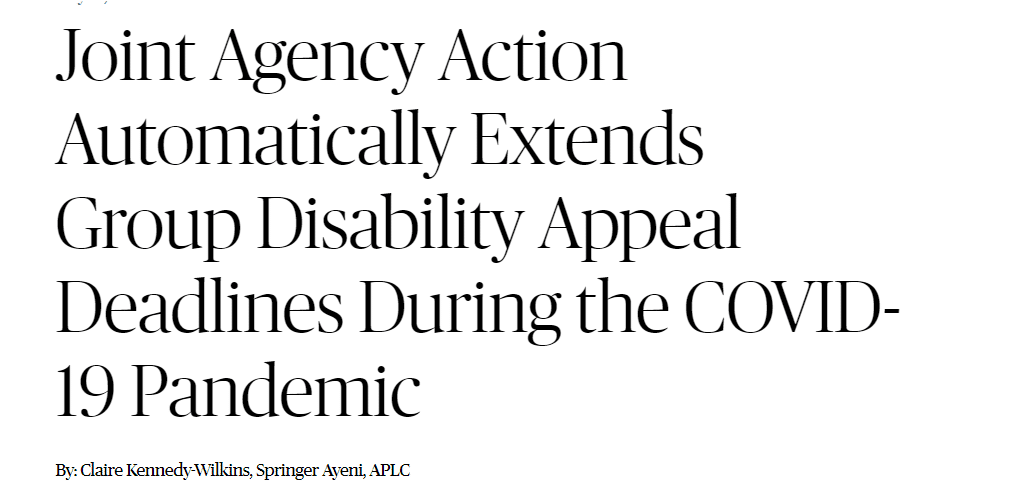
Joint Agency Rule Extend Disability Appeal Deadline in COVID
Congratulations to my co-worker, Claire Kennedy-Wilkins for her thoughtful and insightful article
“Joint Agency Action Automatically Extends Group Disability Appeal Deadlines
During the COVID-19 Pandemic.” In these times, it is great to know that EBSA
and DOL are aware of the added burden on disability plan participants to gather
information for appeals of denied claims and have acted in the interest of
these participants.
#Coviddisability#ABA#erisalawyer#erisabayarea#ERISA#springerayeni#disabilityappeals
https://www.americanbar.org/groups/labor_law/publications/ebc_news_archive/issue-spring-2020/joint-agency-action/
ERISA Basics National Institute 6-Part Webinar Series
June 15th – 17th 2020, I will be speaking on two Employee Benefits Claims panels at the American Bar Association Joint Committee on Employee Benefits sponsored – ERISA Basics National Institute 6-Part Webinar Series. On the panels, I will present: 1) Statutory Overview and 2) Benefit Claims: Administrative Procedures & Litigation. The great news is that – it is virtual! Now you can join in without the burden of travel! #silverlinings. I look forward to the discussions, questions, and sharing of insights/ideas.
For more, see event details: https://www.americanbar.org/events-cle/mtg/web/394126606/
Or contact: Cassie Springer Ayeni, President of Springer Ayeni, A Professional Law Corporation @ www.benefitslaw.com
#JCEB #EBC #ABA #ERISA #Employeedisabilitybenefits #disablity #ERISAlawyer #Superlawyer #Disabilityclaims #Disabilityappeals #Longtermdisability #ERISAlitigator #ERISAbayarea #Disabilitylawyer #Employeebenefitslawyer #ERISAlawfirm #SpringerAyeni #benefitslaw #presenter

Cassie Springer Ayeni Named SuperLawyer 6 Years in a Row
For the 6th consecutive year, Cassie Springer Ayeni has been named a SuperLawyers Top 50 Women Attorney for Northern California, and a Top 100 Attorney for the 5th consecutive year. She has been named to the SuperLawyers list for her expertise in employee benefits for 8 consecutive years.
Read More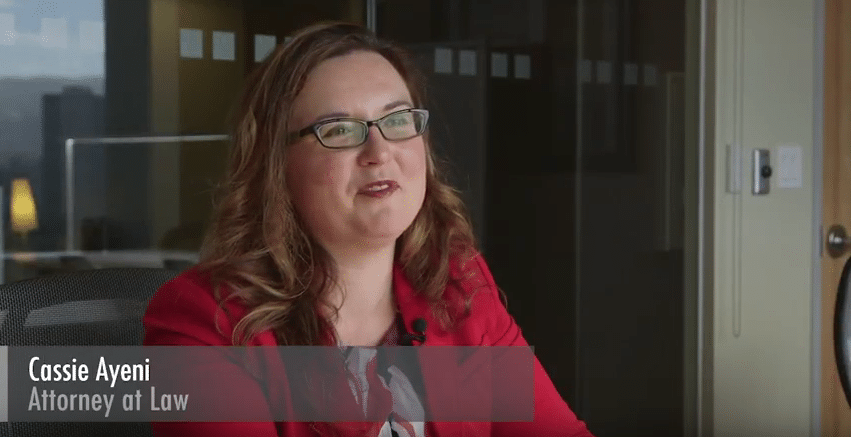
Incoming chair message to Employee Benefits Committee
So much has happened in these few months since I wrote this message to the Employee Benefits Committee as one of its incoming co-chairs. Since then, we had a successful midwinter meeting in Rancho Mirage, but none of us knew that would likely be our last travel occasion for the foreseeable future. Here’s a blast from the near past, which feels like a lifetime ago:
Read More
Here’s a blast from the near past, which feels like a lifetime ago
So much has happened in these few months since I wrote this message to the Employee Benefits Committee as one of its incoming co-chairs. Since then, we had a successful midwinter meeting in Rancho Mirage, but none of us knew that would likely be our last travel occasion for the foreseeable future. Here’s a blast from the near past, which feels like a lifetime ago:
Read More
Springer Ayeni Wins Disability Case Against Aetna
Even in tough times, we are grateful for the hard-working judges and court personnel who continue to decide cases and keep the wheels of justice turning. On March 24, 2020, the attorneys at Springer Ayeni achieved a victory for our client, a man disabled by shoulder pain and denied disability benefits by Aetna Life Insurance Company. Judge Chesney of the Northern District of California ordered benefits paid for Mr. Shaikh’s own occupation and remanded for a determination on the amount. The Court found that Aetna “overly focused” on objective medical evidence and “essentially disregarded” Mr. Shaikh’s credible complaints of pain. Springer Ayeni is now pursuing attorney fees against Aetna. https://law.justia.com/cases/federal/district-courts/california/candce/3:2018cv04394/329565/46/
Read More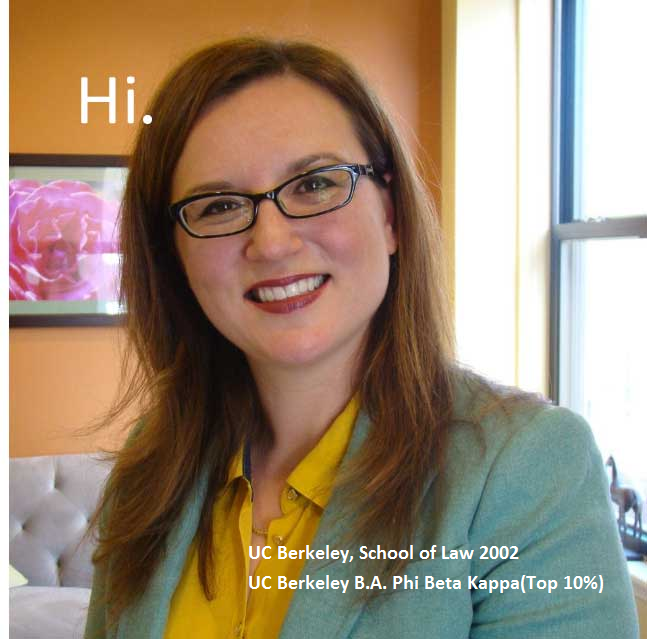
A Conversation with Attorney Cassie Springer Ayeni
Q: When did you know you would pursue a career in the legal field?
CSA: As early as junior high or high school, I felt the need to advocate for others, to make a point to stand up for the kids who were being bullied or ostracized. I also realized around the same time that I truly enjoyed writing, reasoning, and debating. The law seemed a natural fit: I could use my skills to make a palpable difference in people’s lives. I had settled on a career in law by the time I was 16 and never looked back.
Q: Can you explain what types of cases an ERISA Attorney handles and why you chose this area of law?
CSA: I primarily help people with their employer-sponsored disability benefit claims. ERISA governs all private employer benefit plans, not just pension plans. Many employers provide disability benefit plans in addition to health and pension benefits. In fact, 65% of ERISA litigation is over denied disability benefit claims. The plans are often insured, and clients typically come to me after they stop working, apply for disability benefits to the insurance company, and are denied. I then step in to try to get their disability benefit income restored while they focus on their health.
Q: What is your approach or philosophy to winning or representing a case?
CSA: I lead with kindness. I want to understand truly what my clients have gone through medically, economically, and emotionally to get to this point in their lives, and how I can help. In representing a client, I am there for that person: I am responsive and listen with an open heart. I believe this the secret to winning a case as well – if I am doing my job right, I am painting a picture of the person and the case to help the court appreciate why my client is deserving of their disability benefits. I have the paintbrush and paint ready because I have spent months getting to know my clients and researching the law. And I also aim to be the best-prepared lawyer in the room with the most compelling brief … that helps too.
Q: If we interviewed all your past clients … what is “one” common word that comes up when they describe working with your law firm?
CSA: Compassion
Q: What are some of the most popular topics you are asked to lecture on?
CSA: I speak frequently on ERISA topics, especially in my current role as the co-chair of the ABA’s Employee Benefits Committee. I love presenting to newer attorneys about the fundamentals of ERISA litigation, because I am eager to energize attorneys about how engaging ERISA work is. ERISA is fun! The law is always evolving, providing constant intellectual stimulation, and practicing ERISA law is also a great way to help people in need. I also enjoy speaking to women about re-defining what it means to be a successful litigator, and how to challenge traditional law firm standards to achieve a better work-life balance.
Q: What advice would you give to young women who want to pursue a career as an Attorney?
CSA: Any woman who wants to pursue a career as an attorney should make sure that her potential work environment values diversity and inclusion, fosters a sense of belonging, and creates opportunities for women at every turn. If she is unable to find that environment, she should open her own law firm and create those opportunities herself.
Q: How do you maintain a work/life balance?
CSA: Being the owner of my firm allows me to make up the rules: I look to the best practices of progressive companies and pick policies that I believe are imperative to work/life balance for everyone. I figure that everything I need to raise four children and work full-time as an attorney is what everyone at my firm needs too. I offer unlimited PTO, great benefits, four months of fully paid maternity leave, the ability to bring children in to work as needed (in fact I have brought each of my babies into work until they needed another environment), the ability to work from home, and a practical approach to parenting … like closing the office on Halloween and Valentine’s Day so that we can all attend class parties without rushing to or from work. I, of course, avail myself of each of these policies, which is why I created them in the first place. That’s not to say that I don’t wake up early to work for a bit so that I can focus fully on my kids to take them to school, or grab a few hours on the weekend to pound out a brief, but family always comes first, for me and for everyone who works at Springer Ayeni.
Q: What’s one lesson you’ve learned in your career that you can share with our audience?
CSA: I have always learned to be myself. If you are authentic, you are compelling as an advocate and a counselor: you listen and communicate better when you are not spending energy on worrying about how you should come across. I also believe in the power of preparation. If you are committed to doing your best and preparing your utmost, then even a negative outcome cannot be met with regret, but a positive outcome is much more likely. And if you’re nervous before a court appearance or speaking engagement, just take a breath and realize that even in a worst-case scenario, you will survive and move forward … we all do.
Q: What are some of the challenges you feel women face today?
CSA: Looking at women lawyers only, there is much progress to be made. As Joan Williams at the UC Hastings Center for WorkLife Law has analyzed convincingly, women lawyers (and women in other fields too) are asked to “prove it,” then “prove it again.” In other words, women need to do the job before getting the promotion, whereas men are promoted based on potential. This is a major obstacle to women’s promotion and needs to be addressed systematically.
Five Things About Cassie Springer Ayeni
1. If you could talk to one famous person past or present, who would it be and why?
There are so many! But if I had to pick one it would be Harriet Tubman – her courage and vision even in the face of medical problems were and are awe-inspiring.
2. What’s your favorite holiday? Why?
Valentine’s Day! I don’t view it as just a romantic holiday, but as a day to express to those around you how much you care.
3. If you were a superhero, what would your special powers be?
Time-traveling. That would be magical!
4. What app can’t you live without?
Facebook – it has allowed me to make great connections with other lawyer moms – lawmas!
5. Favorite food to eat?
Strawberries. Now, then, forever, and always.
See the interview at https://bayareawomenmag.com/news/view/11665/Her_Firms_Achievements_-_Results_are_Measured_by_the_Satisfaction_of_Her_Clients_A_Conversation_with_Attorney_Cassie_Springer_Ayeni
Read More10 Questions to Ask a Disability Lawyer Before You Sign
Let’s face it: it’s daunting to hire an attorney. There are thousands of lawyer jokes for a good reason. But sometimes in life you need a good advocate in a legal proceeding, or just someone to give advice before the going gets rough. Hiring an attorney requires careful consideration of not just the finances of the relationship, but also a determination of whether she will be a good fit for one of the most significant professional relationships you will likely have. These questions will help you avoid making mistakes when choosing an attorney who suits your style.
Q1. Can you give me a cost estimate?
Attorneys will not be offended by this question. We know it’s pricey to hire a lawyer and you need to plan for it. A good attorney will offer a variety of options to work with your budget and risk tolerance. If an attorney offers to work on a “contingency fee,” that means she will work unpaid until securing money on your behalf, and then her fee will be a percentage of that award. Typical attorney contingency fees range from 33-40%. If an attorney offers an hourly rate, be sure to ask if other attorneys in the office can do some of the work at a lower rate, and if administrative tasks can be handled by paralegals or legal secretaries, as this might be a way to reduce the monthly bill. Also ask if the attorney bills in .1 hour or .25 hour increments and if she bills for small emails or voicemail exchanges. Some attorneys may offer a “flat fee,” or you could suggest that option yourself. Many clients like the certainty of a financial cap: but beware the unethical attorney who would accept that amount of money then work as little as possible. You need to trust the attorney you hire before agreeing to any of these arrangements, but especially the flat fee. If you get a “shark vibe,” look in another direction. Also, if you have a creative idea, feel free to propose it! At the very least, it will give you an idea of how open-minded your future attorney might be.
Q2. Can you tell me how you would approach my case?
Most attorneys tread very carefully about giving legal advice without a retainer agreement in place, as they do not want to create an attorney-client relationship where there really is not one. A good attorney will listen to your problems, describe how she might handle your case, and may give some general information or direct you to a resource, but steer clear of an attorney who is over-eager to breach ethical constraints by doling out free advice just to nab you as a client.
Q3. How do you handle these types of cases?
An experienced attorney should have an easy answer to this question. For example, as an ERISA attorney, I am clear about what needs to happen to maximize the chance of a successful outcome when, for example, appealing a denied disability benefit claim. If it was my first rodeo, I wouldn’t have a firm plan of action. Look for a thorough and confident answer to this question.
Q4. Have you ever handled a case with facts similar to mine?
In my area of the law, I interact with people who have myriad ailments causing their disabilities. My clients feel comfortable off the bat if they know I am at least familiar with their medical conditions, and you probably will too.
Q5. How accessible are you?
Some attorneys specialize in reeling in clients and then disappearing. Make sure your attorney will be involved in your case from start to finish, even if she doles out assignments to others in her law firm. Just like most professions, attorney skills and personalities vary widely, so make sure that you are getting what you’ve paid for. Which leads me to…Question 6:
Q6. What are your past results in cases at the same stage as mine?
No attorney could possibly guarantee an outcome in your case – there are too many variables. But an attorney should definitely be able to describe similar cases she has handled and what the outcome has been.
Q7. Will attorneys or paralegals do most of the work in my case?
A law firm that has a paralegal doing attorney work (writing substantive letters, making strategy decisions on cases, etc.), is very different from a law firm where the attorneys do all of the attorney work. Be sure you know who will be working on your case and their credentials.
Q8. What are you most proud of in your career? In your personal life?
Get a sense for the attorney’s values by asking her to describe a case that has meant something to her. You’ll understand a lot about her style and substance by hearing her describe a proud moment. If she’s willing to discuss a proud personal moment, that could be a great opportunity for you to see who she really is. I figure that clients have to entrust a lot of sensitive information to me about their lives, so I definitely don’t mind sharing now and again about my own if asked. It’s the least I can do to bond with my client on a human level.
Q9. At what stage do you get a positive outcome for most of your clients?
Some attorneys like to get to court as quickly as possible. Some attorneys like to try to secure a victory at an earlier stage for their clients. If you are a “rush to court” person, you should find an attorney with a similar mindset. If you prefer an attorney who tries to get a positive outcome sooner, even without having to file a lawsuit, you should hire an attorney who shares a similar point of view.
Q10. How involved do I have to be?
My style is to include the client if she wants, but my preference is to just let her sit back, relax, and let me handle the nitty gritty details of her case without stressing her. Some attorneys may want more client involvement, particularly if they can get a client to do some of the legwork. Figure out how much involvement is comfortable for you, and make sure your potential attorney is a good match for your comfort-level.
Above all, make sure that you like your potential attorney. You will talk with her for hours, email frequently, and she will know more about you than many others in your life might. If you like her, feel like she understands you as a human being, and that she will work tirelessly for you, then it’s a match. And, of course, if you want to talk to me about a disability benefit application, appeal, or lawsuit, feel free to call and ask me any of these questions!
Read MoreERISA Disability Benefits At Work
Thanks to CNN for covering such an important story. I’m proud to represent this brave and amazing woman, Erika Zak. She was approved for her liver transplant at the last minute, but I was poised to file a complaint in the coming days if UHC had not finally done the right thing. Still, I wish it had reached this decision months ago. I hope she can now get the transplant as quickly as possible so that she will celebrate many more Mother’s Days to come. #livertransplant #ERISA #mothersday #Springerayeni #benefitslaw
https://www-m.cnn.com/2018/05/13/health/liver-transplant-mom-erika-zak/index.html
Read More