


What Qualifies for Long-Term Disability?
When you are coping with a serious illness or injury, the last thing you want to worry about is how to keep a roof over your head or pay the bills. Long-term disability insurance is designed to protect your income when medical problems prevent you from working for an extended period of time. But if you are asking yourself what qualifies for long-term disability, in terms of severity of medical conditions and nuances of your particular long term disability policy, you are not alone.
The answer is not always straightforward. Qualification depends on the language of your policy, the medical condition itself, the support of your medical providers, the medical evidence you provide, and the way your health condition affects your ability to perform your job. This article explains what long-term disability means, which conditions may qualify, how to meet the requirements of your policy, and what to expect in the process of filing a claim.
Understanding Long-Term Disability
Before diving into the details of qualifications, it helps to understand what long-term disability is and how long-term disability benefits work. In simple terms, long-term disability insurance is a form of income replacement insurance, separate and apart from state or federal disability programs like California’s SDI or Social Security’s SSDI benefits.
Employer-sponsored long-term disability benefit plans provide monthly payments based on your prior earnings, subject to offsets for other income sources, and up to a maximum benefit, when you cannot work for a significant period of time due to a disabling medical condition. Even though these are employee benefits (and governed by ERISA), your disability does not need to stem from a workplace injury. It can be any condition that prevents you from performing your job.
Most people access long-term disability (LTD) coverage through their employer’s benefits package at the start of employment. Some companies provide basic coverage automatically, while others offer it as an optional benefit. Some employers allow you to pay for the premiums with your after-tax dollars, and some employers pay the premiums for these policies themselves. Private policies are also available for purchase individually, often by professionals in demanding or high-income fields as a supplement to the employer’s ERISA policies. These policies are known as IDI or Individual Disability Insurance LTD policies and are paid for by the individual through monthly or annual premiums paid directly to the insurance companies. For example, many physicians are counseled on the benefits of IDI policies while in residency and sustain those policies through paying premiums themselves throughout their careers.
The core idea is the same in either case: if your health prevents you from earning a paycheck, in whole or in significant part (partial disability), then long-term disability benefits step in to cover a percentage of your lost income.
What Is Long-Term Disability?
Policies differ, but the general definition of long-term disability in most policies for the first two years of benefits is the inability to perform the material and substantial duties of your regular occupation (as it is performed in the national economy) in light of your education, training, experience, and station in life. After two years, most LTD definitions of disability shift to an “any occupation” standard, where to qualify you must be disabled from “any occupation,” though it remains in light of your education, training, experience, and station in life. Not all policies are worded the same, so it’s important to request and review your specific disability benefit policy.
Some policies begin paying benefits after you have exhausted short-term disability or after a certain number of days known as the “elimination period,” which is often 90, 180, or 365 days after your disability began.
What Medical Conditions Qualify for Long-Term Disability?
There is no single list of approved diagnoses that qualify you for LTD benefits. Instead, the question is whether your specific condition prevents you from performing the core duties of your job, and whether the disability is backed up by acceptable medical evidence, which can include your report of symptoms to your doctor. Still, certain categories of illness and injury commonly appear in claims.
Musculoskeletal disorders are a leading cause of disability claims, according to the World Health Organization.1 Severe arthritis, degenerative disc disease, chronic back pain, post-surgery pain, and spinal injuries may all limit your ability to sit, stand, lift, or move in ways required by your job. Moreover, being in pain can interfere with your ability to concentrate and perform your job with speed and accuracy.
Neurological conditions such as multiple sclerosis, Parkinson’s disease, epilepsy, migraines, or traumatic brain injuries often interfere with concentration, coordination, and stamina.2
Chronic fatigue conditions like Long-COVID, Chronic Fatigue Syndrome (MECFS), or fibromyalgia can interfere with your ability to reliably show up for work every day and work a full day. They may also affect your cognition (brain fog is common in Long-COVID) and stamina, even if you work in a sedentary occupation.3
Mental health conditions can also result in disability, though often policies limit the award of benefits to just 24 months, and the disability needs to be from your occupation, not a particular work environment.4 Major depressive disorder, generalized anxiety, bipolar disorder, and post-traumatic stress disorder can make it impossible to maintain reliable work performance, or even to get through some activities of daily living.5
Cardiovascular and respiratory conditions such as coronary artery disease, stroke, heart failure, or chronic obstructive pulmonary disease may prevent sustained exertion, travel, or even the ability to remain alert through a workday.6
Immune system disorders like lupus, rheumatoid arthritis, Crohn’s disease, and other autoimmune illnesses can cause unpredictable flare-ups, fatigue, and pain.7
Cancer and other serious illnesses may qualify at different stages of treatment or recovery. Chemotherapy, radiation, and surgery often leave lasting effects on energy and cognition.8
The key point is that the diagnosis itself is not enough. Insurance companies look closely at the documented impact of your condition on your ability to perform your job.
Long-Term Disability Examples
To understand how this plays out, it helps to look at long-term disability examples:
An orthopedic surgeon with a hand tremor caused by Parkinson’s disease may be unable to safely perform surgery, even though she remains otherwise healthy.
- An attorney with severe depression or chronic fatigue may find that cognitive fog, poor concentration, and exhaustion prevent him from meeting deadlines, managing a caseload, supervising others, or otherwise functioning with the near-perfection assumed to be the standard in our stressful profession.
- A tech executive undergoing chemotherapy may not be able to sustain the long hours or mental focus the role demands, even though she can handle basic daily tasks and attend medical appointments.
Each of these scenarios demonstrates how the same condition could have very different implications depending on the individual and the demands of their profession.
Long-Term Disability Requirements
Every policy has its own set of long-term disability requirements. At a minimum, you must establish these things:
- You meet the policy’s definition of disability. This often means proving you cannot perform the substantial and material duties of your own occupation or, after a certain time period, any occupation for which you are reasonably suited.
- Your condition is supported by medical evidence. Insurers expect supporting medical proof whenever possible, such as imaging studies, lab results, or detailed physician reports. For conditions that do not show up on scans, such as migraines, Long-COVID, or chronic fatigue, thorough treatment records and physician notes are essential.
- Your condition must impact your daily life. In a successful disability claim, it is important to show that your condition limits you not just in work, but that it impacts your daily life as well. Most successful applicants have no trouble meeting this standard, but jaded insurance claims handlers often assume the worst in people, and it is crucial to demonstrate that every aspect of your life is impacted by your severe medical condition.
- You are under the care of a physician. Most policies require ongoing treatment, and failing to receive regular medical care can be grounds for denial.
- Your physician must support your long-term disability claim. Perhaps this seems obvious, but nothing will result in quicker denial than having a physician who thinks you can continue working, or who refuses to complete the paperwork required by the insurance carrier to support disability. At Springer Ayeni, we try to make this process as simple and clear as possible both for you and for your busy physician.
It is also important to pay attention to policy exclusions. Pre-existing condition clauses, mental health limitations, and substance abuse exclusions can all affect eligibility.
What Is Considered a Long-Term Disability?
When insurance companies evaluate claims, they ask not only what diagnosis you have but also what is considered a long-term disability under the policy. For many insurers, the condition must last beyond the elimination period. Short-term conditions, even if severe, usually do not qualify unless they keep you out of work beyond the initial elimination period.
In practice, this means that recovering from a broken leg might not meet the standard, but ongoing complications that prevent you from standing or walking for more than a few minutes might. Likewise, recovering from pneumonia may not qualify, but chronic lung damage that leaves you unable to breathe normally may.
What Qualifies for Long-Term Disability at Work?
When you apply for long-term disability through employer-provided insurance (ERISA policies), you must prove not only that you are disabled under the policy definition but also that you meet the coverage terms of your specific plan. ERISA (rhymes with “Marissa”), stands for the Employee Retirement Income Security Act of 1974, and is the federal law that sets rules for employee benefits. ERISA carves out that benefits for government workers are not covered by ERISA, nor are employers that are religious institutions.9 A qualified ERISA attorney can help you understand whether your plan is likely covered by ERISA.
If your private employer’s benefit plan is governed by ERISA, you must be mindful of ERISA’s strict deadlines and requirements that claimants “exhaust administrative remedies” before filing a lawsuit. In practice, this means you must complete the insurer’s appeal process before taking your case to court. Missing a deadline or failing to submit proper evidence during the appeal can permanently harm your case. Moreover, the appeal process may be your last opportunity to get evidence into the record that you might want a judge to see, so it is critical that you find an experienced ERISA lawyer to handle your administrative appeal to the insurance company.
As a practical matter, Springer Ayeni often will reject cases if we have not assisted with the administrative appeal. So, as soon as you receive a written adverse benefit decision, you should reach out to us to see whether we can represent you, before it’s too late for us to help.
How to Get Long-Term Disability Benefits
If you are wondering how to get long-term disability benefits, the process begins with filing a claim supported by detailed documentation. You will need to complete forms, provide medical records, and often submit statements from your treating physicians. Even if you have signed an authorization allowing the insurance carrier to obtain medical records for you, it behooves you to provide every reason for the insurer to approve the benefits, including your medical records, rather than waiting for it to find the supporting information on your behalf. Some insurers request vocational assessments or independent medical examinations. Most insurers then send the application materials to an in-house or outside nurse or physician for review.
The process is rarely simple. Insurers often deny claims at the outset, arguing that the medical evidence is insufficient or that you can still perform some type of work according to its own medical team. If that happens, you must pursue an appeal within the deadlines set by ERISA, and finding a lawyer at this stage is critical at this point.
Because the system is complex, the smartest approach is to seek qualified ERISA counsel as early as possible, even before you make the actual claim to the insurance company for short- or long-term disability benefits. Many claimants seek legal guidance early because their medical conditions are progressive in nature, and the proverbial “writing is on the wall” that they won’t be able to sustain work for much longer. An attorney familiar with ERISA and disability law can ensure that your initial claim is strong and that your appeal includes all the evidence you may need if litigation becomes necessary.
Bringing It All Together
So, what conditions qualify for long-term disability? There is no universal answer. Each case depends on your diagnosis, the functional limitations it creates, the demands of your job, and the specific language of your policy. The unifying factor is whether you can continue to perform your occupational duties reliably and safely. At Springer Ayeni, we treat each case with the individual attention and strategy that it deserves. There is no “one size fits all” approach to our practice, because each of our clients has unique needs that we tailor or strategy to address.
For anyone asking what qualifies for long-term disability, the journey can feel daunting. But with clear medical evidence, careful attention to policy requirements, and, when needed, strong legal advocacy, it is possible to secure the financial protection you need.
At Springer Ayeni, APC, we have spent more than two decades guiding professionals through this process. We understand the challenges you face and are committed to helping you navigate the system with both skill and compassion. If you are struggling to understand your eligibility or facing a denial, we are here to stand by your side.
1 Musculoskeletal health. (14 July, 2022). World Health Organization. https://www.who.int/news-room/fact-sheets/detail/musculoskeletal-conditions
2 Chaudhuri, Behan, “Fatigue in Neurological Disorders,” (2004) available at https://pubmed.ncbi.nlm.nih.gov/15043967/ (“Chronic fatigue is a typical symptom of neurological diseases”).
3 Long COVID Signs and Symptoms. U.S. Centers for Disease Control and Prevention. https://www.cdc.gov/long-covid/signs-symptoms/index.html
4 Advisory Council on Employee Welfare and Pension Benefit Plans, “Long-Term Disability Benefits and Mental Health Disparity,” (2023).
5 Mental Disorders. Cleveland Clinic.
https://my.clevelandclinic.org/health/diseases/22295-mental-health-disorders
6 Heart Disease Facts. U.S. Centers for Disease Control and Prevention. https://www.cdc.gov/heart-disease/data-research/factsstats/?CDC_AAref_Val=https://www.cdc.gov/heartdisease/facts
7 Autoimmune Diseases. National Institute of Allergy and Infectious Diseases. https://www.niaid.nih.gov/diseases-conditions/autoimmune-diseases
8 Chemo brain. Mayo Clinic. https://www.mayoclinic.org/diseases-conditions/chemo brain/symptoms-causes/syc-20351060
9 US Department of Labor, “Employee Retirement Income Security Act (ERISA). https://www.dol.gov/general/topic/retirement/erisa (noting that “In general, ERISA does not cover plans established or maintained by governmental entities, churches for their employees, or plans which are maintained solely to comply with applicable workers compensation, unemployment or disability laws. ERISA also does not cover plans maintained outside the United States primarily for the benefit of nonresident aliens or unfunded excess benefit plans.”)
Read More
I’m a Physician with a Disability—What Can I Do to Protect Myself?
As a physician, you’re trained to solve complex problems under pressure. You have worked hard for your career, and probably never expected to have to stop working due to a disability. Perhaps you applied on your own for those benefits and the insurance carrier denied your claim, or perhaps you’re beginning the process of applying for long-term disability insurance benefits. What can cause highly educated medical professionals to lose their long-term disability appeals?
It’s not a lack of intelligence. And it’s definitely not because you’re “not really disabled.”
In my work representing physicians and other high-income professionals, I’ve seen a frustrating pattern: doctors who rightfully file for disability benefits are denied just as frequently (and sometimes more so) as people who are not trained in medicine.
Here’s what’s going wrong, and how you can protect your livelihood and your future.
- Doctors are often treated on an informal basis by their colleagues
Any professional with a large network of trusted colleagues will turn to them first when something in their field goes wrong. That’s a given, and I get it. My father was a general practitioner from 1969 until 2021, when he passed away, and he was my first, and often only, phone call when I or my family had a medical concern. However, these initial, informal phone calls and diagnoses don’t make it into your medical records. So while you may have a months- or years-long history of seeking medical advice for your ailment, the medical records may look as though you just started treatment for a condition that has now become disabling. My first task with any of my clients in the medical field is to request their complete relevant medical records, so that I can ascertain how supported their disability is within the records that the insurer will review. And if those records are incomplete or sparse, I develop a strategy, through declarations, letters, or any other means, to make sure that the true course of treatment is documented in the long-term disability claim file.
- Insurers may use narrow definitions of “Disabled” for doctors
If you’re a surgeon who can’t operate anymore, that may seem clearly disabling to you. But your policy might say otherwise—especially if it’s a group policy through your hospital or medical group.
Many doctors are shocked to learn that their policy allows the insurer to deny benefits if they can do any work in a related field, such as consulting or teaching.
What to do: Get a copy of your full policy—not just the summary. A legal review by Springer Ayeni can help uncover how your “own occupation” is actually defined.
- Doctors may think it’s better to scale back to part-time rather than filing a disability benefit claim
In my experience, physicians and other professionals who have dedicated their lives to developing their expertise through education and practice, are incredibly determined to hang onto even part of their work rather than file a claim under disability insurance policies. Why? Because you have worked for your entire life to become a physician, and you may have even set that personal goal when you were just a child. My father never retired as a physician, and even when he became frail and sick, he kept working, forsaking all else, until shortly before he passed. For those of us who truly enjoy helping others in our profession, we may not even contemplate retirement, let alone leaving the practice much earlier than expected due to a disability.
Unfortunately, long-term disability insurers often operate under what I have dubbed the “hit by a bus theory,” where one day you are fully capable of performing your job without limitation, then you get “hit by a bus,” and the next day you are disabled. Most disabilities are not so straightforward, and many physicians continue working as long as they can with progressive disabilities,.
If you have strived in your profession for years and years, then your medical condition causes you to lose some capacity, you might start by scaling back your hours, or switching to more administrative tasks. Before making this kind of career move, please give me a call at 510-926-6768, so I can discuss the strategy of whether you might qualify for long-term disability benefits, and what the impact of switching job duties or reducing hours might be on an eventual disability claim.
What to do: Call me to discuss your disability and the terms of your benefit plan as soon as possible so that you can develop a strategy for whether, and how, you might either scale back your duties, file for disability benefits to replace your lost income, or both. Ironically, disability insurers often scrutinize partial disability claims harder than total disability claims, seeming to punish those who have tried heroically to keep working despite disabling limitations. I am here to help and advise, and I encourage you to let me help you make an informed decision about reducing your hours or filing a disability claim.
- Medical Records or Treating Physician Forms Alone Usually Aren’t Enough
Insurers don’t just want to know your diagnosis. They want to see how your condition limits your ability to perform your specific job duties. In the ultimate “gotcha,” however, insurance forms for treating physicians to fill out either don’t ask the right question (“how”) or don’t leave enough room for your doctor to answer that question thoroughly. Stating an ICD Code and a condition, like “long-COVID,” “Parkinson’s Disease,” “Mild Cognitive Disorder,” “Major Depressive Disorder,” or “Migraine,” etc., is insufficient to prevail on a claim for disability benefits. You and your doctor need to explain how your condition affects your ability to specific tasks in your practice, such as stand during rounds, hold your arms in the correct position during surgery, respond adequately to emergencies, work a nightshift or be on-call, or manage a high-stress practice.
What I suggest: Work with your treating doctor to create a detailed functional report—not just a chart note, by writing down a list of what specific job duties are affected by your disability, and going over that list with your treating physician. It’s best if your medical records can be as detailed as possible about what you are unable to do at work. Also, the boxes on insurance forms are not a limitation! Put in an asterisk and attach a supplemental page or 2 to submit as much helpful information as possible.
- Doctors Are Prime Targets for Surveillance
High-income professionals like doctors are often watched, because they are expensive claims for the insurer to pay. A short video of you walking, driving a distance longer than your restrictions permit, shopping in a store, or attending your child’s sports game can be twisted to argue you’re not truly disabled.
What to do: Make sure all of your social media settings are set to “private.” Be mindful of what you do in public and what your restrictions and limitations are. Be honest in disclosing your actual activities on forms. For example, if your physician has recommended exercise to improve your disabling conditions, make sure you state on your application or update forms what you do and why it was prescribed by your doctor. If benefits have been denied, be sure to request and review all surveillance footage so that you can include context for what was actually happening on that day. Judges ultimately appreciate context, and understand that there may be anomalous events that do not necessarily mean that you can return to the full-time practice of medicine. While insurers may be looking for a “gotcha,” have faith that most judges are wise enough to see the big picture.
- ERISA is brutally technical
The ERISA process has strict rules. You often get only one appeal to submit your evidence, and it must be submitted by a specific date or you lose your right to the claim. Moreover, if you miss including key documents, you may not have the chance to get that evidence in front of the court if you later go to court.
What to do: Don’t wait until after your appeal is denied to consult a lawyer. The best time to get legal help is before you submit your appeal—when there’s still time to shape the record. Reach out to me at www.benefitslaw.com or 510-926-6768 and I would be happy to discuss your specific issue with you in more detail.
Read More
The Elephant in the Room: Can AI Really Handle Your ERISA Disability Claim and Appeal?
Why Turning to a Bot for Legal Advice Could Hurt Your Claim—And What You Deserve Instead
Let’s be honest: more and more people are asking AI tools like ChatGPT or Google’s Gemini how to appeal a denied disability claim before they ever think of calling a lawyer.
I get it. AI is fast. It’s available 24/7. It doesn’t require talking with a live person about the difficult details of your health. And, of course, AI is free or low-cost.
But when your financial stability and health are on the line, you need to know the full truth: AI is not a substitute for experienced legal counsel. In fact, trusting AI blindly could do more harm than good.
As someone who has spent 23 years representing clients in ERISA disability cases, I’m not here to bash technology. There is much to gain from the efficiency of evolving technology and I am certainly not advocating AI abstinence. I am here, however, to lay out the risks, differences, and reasons why having a compassionate, strategic, and knowledgeable attorney matters for something as critical to your financial health as your long-term disability benefits.
Why People Turn to AI—and Where It Falls Short
If you type into ChatGPT:
“How do I appeal a denied ERISA disability claim?”
You’ll probably get something like this:
“Request your claim file. Review the denial letter. Submit additional medical evidence. Write an appeal within 180 days.” You might even get general “advice” about including medical records and statements in support of your appeal. However, even AI knows its own limitations. A common Bot disclaimer goes something like this:
“Generative AI features are not intended for professional advice. Do not use generative AI features to seek or provide legal, medical, financial, or other kinds of professional advice or any opinions, judgments, or recommendations without conducting your own independent consultation or research. Generative AI features cannot replace advice provided by a qualified professional and do not form any such relationship (e.g., attorney-client relationship).” (https://www.adobe.com/legal/licenses-terms/adobe-gen-ai-user-guidelines.html)
Even tech giants know that the disclaimer is necessary because AI advice is not strategic, not confidential, not detailed, and, in fact, is dangerously simplistic.
For example, AI does not, and cannot, analyze whether your plan’s language requires a de novo or abuse of discretion standard of review in court; whether the facts of your case meet the definition of disability under your plan language; whether the insurer has disclosed all required information in its claim file; whether there is evidence of biased claims handling in your file; whether the insurer has calculated offsets accurately in your case; what evidence in the claim file needs to be rebutted in an appeal; what the likelihood of settlement and possible settlement amount in litigation might be. The list goes on and on. These are the kinds of distinctions that change the outcome of a case—and they’re not in an AI’s toolbox.
The bottom line: AI gives you non-confidential general advice. Springer Ayeni gives you a legal strategy based on decades of experience handling ERISA long-term disability cases.
AI “Hallucinations” and Fake Law: A Dangerous Trend
AI tools are known for hallucinating legal citations—that is, making up case law that sounds real but isn’t. See https://hai.stanford.edu/news/ai-trial-legal-models-hallucinate-1-out-6-or-more-benchmarking-queries I’ve read up on examples of how AI will generate completely fictitious case references and quotes from decisions that don’t exist. This isn’t just sloppy, it’s dangerous.
First, if you submit an appeal letter to an insurer or judge citing bogus cases, you undermine your credibility. Second, insisting that there are cases in your favor when you reach out to an attorney, when those cases are entirely fictious (unbeknownst to you), will make an attorney hesitant to offer to represent you. Attorneys and their clients should be on the same team at all times. Most importantly, you won’t even know when AI has done you dirty with a fictitious citation, because it often sounds right and the wrong cases are mixed right in with actual cases.
The bottom line: Legal writing is not just writing. It’s advocacy, precision, and ethics. AI is still a baby in the world of law, and cannot be trusted to do actual legal research.
AI Is NOT Confidential, and that Can Put You at Risk
AI is not a lawyer. It doesn’t form an attorney-client relationship, as all of the tech User Guidelines state. That means:
- There is no legal confidentiality. What you input may be stored, analyzed, or even discoverable later.
- You might waive privilege by sharing facts about your medical condition, employment, or insurer. Moreover, AI remembers your input from search to search, so even if you don’t share all the facts in one session, it may know a lot more about you, your condition, your family, your history, your dreams, and your goals from all of the data you have input in previous searches.
- There is no duty of loyalty. AI doesn’t protect your interests—it just completes a task. For example, when Chat GPT conversations are shared, Google produces those conversations as “results” upon a simple search. See https://cybernews.com/ai-news/chatgpt-shared-links-privacy-leak/
As an attorney, I never input confidential client information into AI platforms. Doing so risks ethical breaches and the security of your case. Some lawyers are misusing AI and unknowingly exposing clients. That’s not how I work.
If I use AI at all, it’s only for mundane administrative tasks—not for case strategy, legal analysis, or communication.
The bottom line: Your trust is sacred. And your privacy is non-negotiable. AI will not protect you and advocate for you like a good attorney will.
A Real Appeal Tells the Real Story—Not Just the Medical One
An AI might focus only on lab results and doctor notes. But I know that winning a disability appeal requires telling your whole story, not just summarizing medical visits. It also requires understanding the law and how it applies to the facts of your case, and being able to spot and rebut flaws in the insurer’s claims handling and medical reviews.
I listen for and translate the truths that often don’t make it into a medical file, like how your fatigue crashes your productivity by noon, or how your brain fog makes multi-step tasks impossible not just at work but in your everyday life, or how your anxiety prevents you from completing your tasks efficiently, or even how you have good days and bad days, requiring you to rest for days if you have over-exerted yourself on a good day.
I draw out the details of your daily life, your work history, and your limitations, and I explain them clearly and persuasively to the insurance company. This isn’t something a chatbot can do. It takes time, training, empathy, experience, and sound judgment.
The bottom line: I’m not just reviewing records. I’m building your narrative, filling gaps in the file, rebutting arguments, and fighting for your future.
AI Can’t Show Up for You. I Will.
Some pundits say AI will replace lawyers. I do think that technology can make lawyers more efficient at administrative tasks that take away from time spent on actual cases. However, the best lawyers, those who listen, advocate, strategize, work as a team with their client, and ultimately are successful in cases, cannot ever be replaced by a bot. Technology will evolve, but compassion, reputation, and results still matter.
When you retain me, you’re not getting a script. You’re getting:
- 23 years of ERISA disability experience
- Strategic, circuit-specific legal knowledge
- A reputation for success and tenacity among colleagues, insurers, and opposing counsel
- A teammate who sees you as more than a claim number
- A fierce advocate who will not ignore you or reduce you to a piece of datum that will influence future actions
The bottom line: You deserve someone who understands not just the law, but the weight of what’s at stake. You deserve someone who knows how to get results and treats you with dignity along the way.
Final Word: Don’t Trust a Bot with Your Livelihood
AI has its place, but not as your attorney. Not when your disability benefits, your financial survival, and your mental and physical health are on the line.
Before you go down a rabbit hole of chatbot answers, talk to someone who’s been through this hundreds of times, someone who won’t hallucinate law, who respects your privacy, and who knows how to win an appeal, not just write about it.
Contact Springer Ayeni today. Let’s protect what matters most—your income, your dignity, your future.
Springer Ayeni: Compassion. Reputation. Results.
www.benefitslaw.com
How to apply for COVID-related disability claims
Partnering with Body Politic to offer information on how to apply for COVID-related disability claims was one of the highlights of my December. Check out the video at https://www.youtube.com/watch?v=v4WgcYyp0g0&feature=youtu.be
Wishing everyone a happy and HEALTHY 2021.
For more information, contact Cassie Springer Ayeni, President of Springer Ayeni, A Professional Law Corporation
#covid #benefitslaw #coviddisability #springerayeni #ltdbenefits #ERISA #employeebenefits
Read MoreERISA Basic Virtual Conference by ABA Joint Committee
Please join me, my program co-chairs, panelists, and participants at the American Bar Association Joint Committee on Employee Benefits’ “ERISA Basics” Virtual Conference that will take place from December 7-10, 2020! This year covers series of discussions that span Business Law, Health Law, Labor and Employment Law, Real Property, Trust and Estate Law, Taxation, Tort Trial and Insurance Practice.
To sign up: https://www.americanbar.org/events-cle/mtg/web/403621552/
Or contact: Cassie Springer Ayeni, President of Springer Ayeni, A Professional Law Corporation @www.benefitslaw.com
#ABA #JCEB #ERISA #Employeedisabilitybenefits #disablity #ERISAlawyer #Superlawyer #Disabilityclaims #Disabilityappeals #Longtermdisability #ERISAlitigator #ERISAbayarea #Disabilitylawyer #Employeebenefitslawyer #ERISAlawfirm #SpringerAyeni #benefitslaw
Read More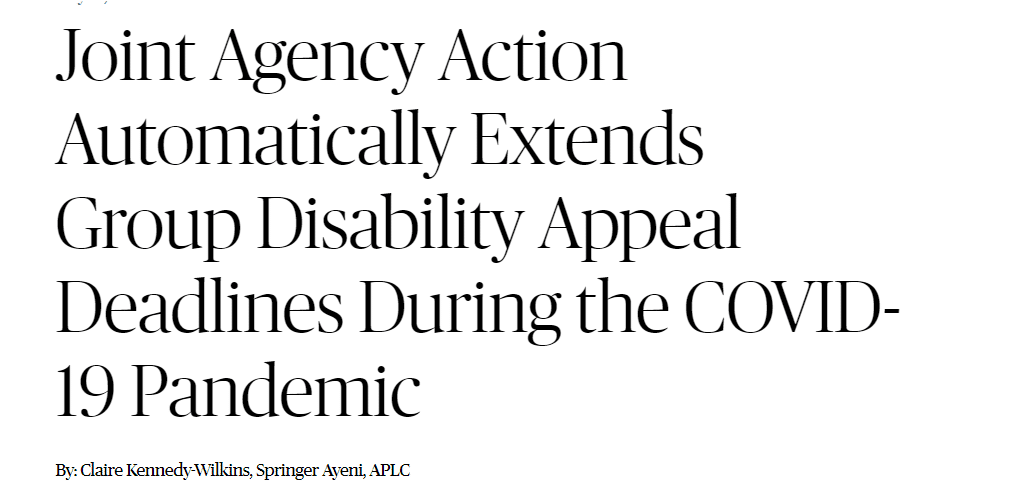
Joint Agency Rule Extend Disability Appeal Deadline in COVID
Congratulations to my co-worker, Claire Kennedy-Wilkins for her thoughtful and insightful article
“Joint Agency Action Automatically Extends Group Disability Appeal Deadlines
During the COVID-19 Pandemic.” In these times, it is great to know that EBSA
and DOL are aware of the added burden on disability plan participants to gather
information for appeals of denied claims and have acted in the interest of
these participants.
#Coviddisability#ABA#erisalawyer#erisabayarea#ERISA#springerayeni#disabilityappeals
https://www.americanbar.org/groups/labor_law/publications/ebc_news_archive/issue-spring-2020/joint-agency-action/
ERISA Basics National Institute 6-Part Webinar Series
June 15th – 17th 2020, I will be speaking on two Employee Benefits Claims panels at the American Bar Association Joint Committee on Employee Benefits sponsored – ERISA Basics National Institute 6-Part Webinar Series. On the panels, I will present: 1) Statutory Overview and 2) Benefit Claims: Administrative Procedures & Litigation. The great news is that – it is virtual! Now you can join in without the burden of travel! #silverlinings. I look forward to the discussions, questions, and sharing of insights/ideas.
For more, see event details: https://www.americanbar.org/events-cle/mtg/web/394126606/
Or contact: Cassie Springer Ayeni, President of Springer Ayeni, A Professional Law Corporation @ www.benefitslaw.com
#JCEB #EBC #ABA #ERISA #Employeedisabilitybenefits #disablity #ERISAlawyer #Superlawyer #Disabilityclaims #Disabilityappeals #Longtermdisability #ERISAlitigator #ERISAbayarea #Disabilitylawyer #Employeebenefitslawyer #ERISAlawfirm #SpringerAyeni #benefitslaw #presenter

Cassie Springer Ayeni Named SuperLawyer 6 Years in a Row
For the 6th consecutive year, Cassie Springer Ayeni has been named a SuperLawyers Top 50 Women Attorney for Northern California, and a Top 100 Attorney for the 5th consecutive year. She has been named to the SuperLawyers list for her expertise in employee benefits for 8 consecutive years.
Read More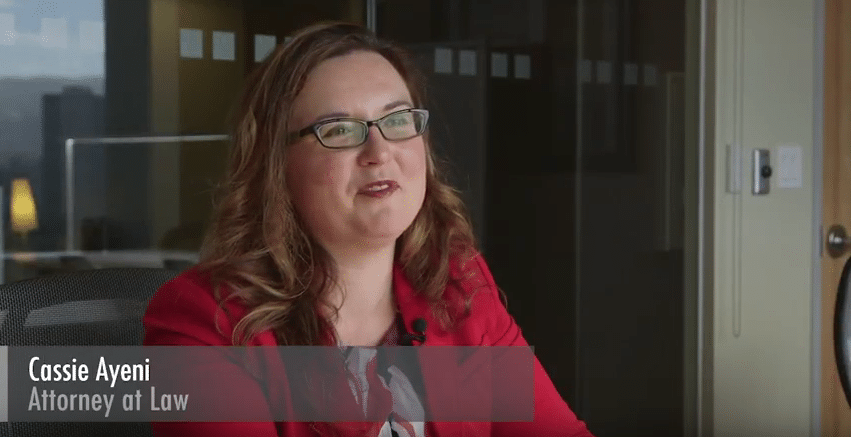
Incoming chair message to Employee Benefits Committee
So much has happened in these few months since I wrote this message to the Employee Benefits Committee as one of its incoming co-chairs. Since then, we had a successful midwinter meeting in Rancho Mirage, but none of us knew that would likely be our last travel occasion for the foreseeable future. Here’s a blast from the near past, which feels like a lifetime ago:
Read More
Here’s a blast from the near past, which feels like a lifetime ago
So much has happened in these few months since I wrote this message to the Employee Benefits Committee as one of its incoming co-chairs. Since then, we had a successful midwinter meeting in Rancho Mirage, but none of us knew that would likely be our last travel occasion for the foreseeable future. Here’s a blast from the near past, which feels like a lifetime ago:
Read More